
PlayStationPlayStation
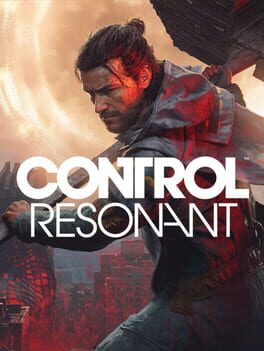
Whispers of a Calling, From Another World Control Resonant is an evolution of confidence, both Dylan’s and the player’s. It’s about a young man gradually recognising his own importance and, more painfully, understanding that he’s a victim of expectations he was never meant to carry. Dylan is thrust into a world he barely understands, surrounded by people who have already decided what he represents. Their judgements collide with his self-deprecation and depression, shaped by authority figures who projected their hopes and dreams onto him in nightmarish ways. Only a handful of people truly see him for who he is, and his connections with them provide some of the game’s most affecting moments. I adore how Remedy expresses this through his physicality. Dylan runs oddly, as if every stride takes effort. He jumps askew, like a newborn creature desperately reaching for something to cling to. Even with his training, he fights clumsily. Yet none of this makes him feel pathetic or unworthy of being an action-game protagonist. Quite the opposite. I love Dylan. I felt for him. I found myself choosing dialogue options where he’d apologise for things he hadn’t done, or credit FBC agents who’d spent more time berating him than helping. His relationship with Arish, or frankly his treatment by Arish, is a bittersweet highlight. Dylan absorbs so much hostility that the eventual opportunity to defend himself feels significant. From there, his responses can become more provocative. He can dismiss Arish’s behaviour or continue praising him, even as Arish risks being demoted and branded a threat to the mission, much like Dylan himself. There’s a tragedy in two people being measured by an institution’s demands, rather than their humanity - which is often the most tested element. That emotional investment extended to the world itself, sometimes in peculiar ways. Take the Park. Initially, the rampant mould put me off. I had a sinking feeling this would be that district, the equivalent of a dreaded water level, somewhere I’d quickly grow tired of exploring. But something strange happened. Just as Dylan became enamoured with the fungal entity, so did I. I spent more time in the Park than anywhere else, gradually enjoying the company of the mould boys and girls. I’d grown comfortable somewhere that initially repelled me. Then, after defeating the resident Resonant, I suddenly wanted to get the fuck out of there. I love that interplay between character and player. Whether entirely intentional or not, Remedy’s narrative and level design worked together so well that the place seemed to get under my skin. A later floating-island subterranean labyrinth achieves something similarly extraordinary, this time through its own terrifying existential narrative. Its twists on time, the fragility of reality and the implications of these forces coming into contact with the Oldest House are fascinating. Again, the environment is a part of what the game is trying to say. There’s also something about Resonant that struck me as er, post-Covid commentary... Yeah, I know. Sorry. Bear with me. I couldn’t shake the sense that it has something to say about the drone-like existence humanity has been expected to accept, even after a lockdown lasting seven years in this world. People have lost their identities and sense of normality, yet seem increasingly willing to pick up weapons and confront the unimaginable for the greater good. From maintenance workers to leadership, FBC personnel have abandoned ordinary lives to fight the consequences of humanity digging too deeply into something it had no jurisdiction over. They’re so accustomed to a perpetual emergency that the extraordinary has become routine and boring. Against that backdrop, Dylan’s discomfort and vulnerability feel more human than any of them. I have to assume this irony was intentional. And of course there’s an obscene amount of lore to consume. Is all that reading necessary? I’d say yes, but that’s just me. It’s there if you want it and easily ignored if you don’t. But I wouldn’t recommend skipping it. Digest the world, sit with its oddities and contradictions, and you’ll get so much more out of the experience. Then there’s the music. Good lord, the music. Some of the most memorable musical drops I’ve experienced in years, made even better by how naturally they exist within the fiction. The original, in-universe tracks establish a strange connection to Dylan’s relationship with the world and himself, almost as though the music is another trick being pulled by the entities at play. Another World was stuck in my head for nearly two weeks. But it wasn’t just the song. It was the feeling I had while playing THAT sequence. I felt an overwhelming urgency to get Dylan out, while sharing his isolation and entrapment. Escaping the sinkhole through multiple facsimiles of ordinary living, each recognisable yet profoundly wrong, was extraordinary. All the while, Zoe, our handler, begins opening up in an attempt to release her own demons. (She is another standout in the game and her relationship with Dylan is so heartfelt and yet never overt in what Remedy are trying to do with them) There’s something beautiful about her choosing Dylan as the person to confide in, someone almost everyone else has treated as expendable. Amid the cosmic horror, two damaged people find a moment of understanding that blossoms into a companionship. That’s what stayed with me. It's often very funny too - Zoe's attempts at poking and prodding Dylan in friendly ways had me always ready to engage with the right dialogue choice. The lack of hand-holding has already been praised to death, but deservedly so. You’re trusted to observe, experiment, recognise patterns and learn the world’s systems for yourself. That sense of discovery is immeasurably more rewarding than having every answer placed in your sweaty gamer lap. And the art direction? Spectacular. Not merely because of its individual showpieces, but because of the cohesion across so many disciplines and developers. I can imagine a solo developer dreaming up these extraordinary districts for a deeply personal indie game. But for an entire team at Remedy to realise something this singular, this consistent, is a remarkable feat of shared vision and understanding. That care and output feels constantly as though it could only come from an auteur. I’d argue Remedy, collectively, have become an auteur in their own right. Every aesthetic choice feels subversive while remaining at home in the Remedyverse. The Board still sound fantastic, bringing welcome levity to oppressive situations. The Hiss VFX and SFX are terrifying and brutal. And the patterning! Some arrangements are so mesmerising and disorientating that I’d stare at them until I felt genuinely off-kilter in real life. When a game’s visual language starts interfering with your own 5 senses, something special is happening. (Sometimes during frenetic combat in zones that had different planes of traversal I did get some vertigo which is crazy because I don't get vertigo!) My one substantial gripe is the upgrade system. It’s too open and friendly. Early on, allocating resources feels meaningful. You’re choosing a style of play and making commitments. But it quickly becomes clear that the optimal approach is to pour points and currencies into everything, since each upgrade contributes to your overall Aberrant weapon strength. Why commit to anything when acquiring everything makes you stronger? I’d have preferred builds with more identity, rewarding experimentation across subsequent playthroughs or New Game+. I suspect Remedy wanted players swapping freely between abilities to meet different threats, which is fair enough. But if that’s the philosophy, why not give us a proper quick-swap system? Instead, you keep ducking into pause menus, loadouts and the Gap to tinker. Yes, Remedy, your use of SSD technology here is impressive. But by the end I was getting tired of holding that button and entering the Gap. I wanted Dylan to pass out and slam his head against something like Chuck McGill. Still, the abilities themselves are fucking sick. The combat is wildly expressive, destructive and satisfying. This is essentially the inFAMOUS game we didn’t get this generation. So fuck it. Have fun. Ultimately, what stays with me isn’t the spectacle, the lore or even those unforgettable musical sequences. It’s Dylan: his awkwardness, vulnerability, emerging confidence and the moments of connection he finds in a world that has mostly regarded him as something to be used. There’s an enormous heart beneath all this strangeness. I came to care deeply for a character who initially seemed to struggle to care for himself. You deserve to play this game, and Remedy deserve your money. Control Resonant is a truly special game. One that, in another world, might never have been made. And I’m incredibly glad it exists in ours.
Verified play: this reviewer has actually played the game.